If you’re not using Google Search Console (GSC) with Google Analytics 4 (GA4), you’re missing a huge piece of your data puzzle: How your visitors found you and what they searched to get there.
If you’ve been following along in our GA4 blog series, you know how important having clear data is to your marketing strategy. If you haven’t been following along, we highly recommend you review the rest of this series.
Check them out easily with the hyperlink above. Don’t worry, we’ll be here when you get back!

Credit: Giphy
We’ve touched on some of the benefits of GSC in our past blogs, but it’s so important that it really deserves its own spotlight. So in this bonus blog, we’re telling you exactly what to track with GSC and how to turn that data into measurable growth for your business.
Why Google Analytics is Not Enough
If you’re investing your valuable time and resources into your marketing efforts, it better be moving the needle. Too often, busy business owners start out strong with their marketing plan and then burn out or become discouraged when they don’t see the results they want.
This is a common problem, and the most common reason is that they aren’t working with the right data. With GSC linked to GA4, you can see your user’s (almost) entire journey:
- Where they started in their search
- How they ended up on your website
- What they did once they got there
With this information, you can identify the visitors who converted (made a purchase/booked an appointment on your website, etc.) and work backward to see what got them there. Think of it like a cheat sheet for understanding the conversions that are (or not?) occurring on your website.
Who wouldn’t spend a little time learning how to do that?

Credit: Giphy
With GA4 and GSC linked, you can easily identify key data like the keywords that are pulling the most weight for you and the keywords that need to be chucked. But there’s so much more to uncover than just keywords. Check out the top 4 best trends to track with GSC.
Start Tracking These Trends
With GSC, you can track several different trends, but we recommend focusing on the following 4 areas to start. These 4 trends will give you the best picture of how your digital marketing strategy is working for you.
Top Performing Queries
“Queries” is just a fancy word for search terms – in other words, what people are typing into their Google search browser. Track this to identify which queries lead to the user clicking on your website.
To discover your organic traffic, or new users who may have never heard of your business prior, rule out the branded queries.
- Branded queries are searches that include your business name specifically.
- Non-branded queries mean a user has discovered you from a related topic, and that topic is your map for finding more users like them.
Find out what topic led those non-branded queries to you, and then use it to attract more users like them by writing more blogs on that topic to prove your authority in the subject. Non-branded queries often signal stronger SEO strategy and broader discoverability.
Click-Through Rates (CTR)
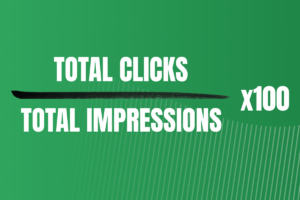
A click-through rate (CTR) is a mathematical equation, or metric, that measures the percentage of people who click on a specific link, ad, or email after seeing it. The equation is total clicks divided by total impressions (people who saw the content). Then, multiply that number by 100 to get your percentage.
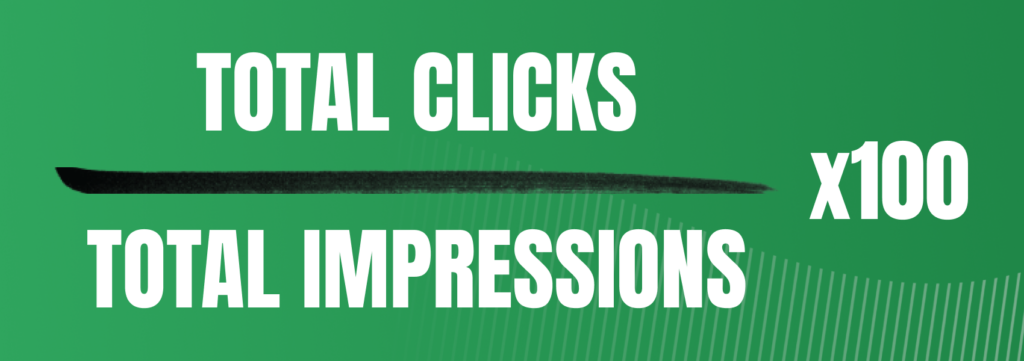
CTR is a strong indicator of how well an ad or piece of content is performing for you. If it’s not performing well, it might be time to rethink your title tag or meta description. Content that doesn’t perform well with your audience isn’t resonating with them. This is a sign you need to conduct more audience research and re-discover who your audience is. Then, speak to them directly.
Improving CTRs across key queries can quickly increase your website’s traffic. A quick win without being independent on moving rankings.
Average Search Position & Rank Fluctuations
Ask yourself an honest question: How often do you look at search results past the second or third one listed? It’s widely understood today that the top few search results likely have the answers we’re looking for, so why bother scrolling down the list?

Credit: Giphy
If your website was ranking in a top position on Google for a certain query, and then suddenly drops positions, this is key data that you need to know. A drop in average position could point to SEO issues, algorithm changes, or new competitor content. You’ll need to do some exploring to find out what changed, but monitoring these shifts helps you proactively protect and improve your overall rankings.
Rising or Declining Queries
Wouldn’t it be nice to have a crystal ball that could predict the future of what people might be searching for? GSC uses specific and predictive algorithms to spot emerging search trends that align with your top content pillars (subjects you typically create content around).

Credit: Giphy
With this information, you can stay ahead of your competition by creating content around an emerging search term that similar companies to yours haven’t yet diluted. With fewer players in the game, you’re more likely to come out on top (literally, when it comes to search rankings!). Use this data to guide your blog calendar, optimize existing content, or create new landing pages around growing demand.
Why GSC Matters for SEO Analytics
GA4 is an excellent SEO tool, as we’ve discussed in blogs 1, 2, 3 and 4. But without GSC connected, you’re missing out on a huge group of data points that tell you whether or not your SEO is working.
With GSC, you’re able to track pageviews as well as analyze:
- Which queries bring users to high-converting pages
- Where you’re gaining (or losing) visibility
- Which keywords correlate with actual business outcomes, not just traffic
It’s these kinds of insights that transform SEO from a content game (hello vanity likes on Instagram) into a measurable growth machine for your business (actual ROI).
Was This Helpful? How to Find More Blogs Like This
While this is, sadly, the end of our Google Analytics 4 blog series, it’s not the end of GreenCup Digital supporting our audience with real, actionable marketing advice that’s beyond how to get more views on Reels (though we can help with that, too).
For more help across all subjects of digital marketing, be sure to browse our full blog. If you have more questions or want one-on-one guidance, we’re here to help. Reach out to us directly and we’ll set up a time to chat.